





AC to DC car inverter vs DC-DC: which is right for your vehicle?
- 1. What is an AC to DC car inverter, and how does it function?
- 2. How does an AC to DC car inverter differ from a DC-DC converter?
- 3. What are the key factors to consider when choosing an AC to DC car inverter?
- 4. Are there specific safety features to look for in an AC to DC car inverter?
- 5. How do I determine the appropriate power capacity for my AC to DC car inverter?
- 6. Can I use an AC to DC car inverter to charge devices while driving?
1. What is an AC to DC car inverter, and how does it function?
An AC to DC car inverter is a device that converts the alternating current (AC) from your vehicle's power source into direct current (DC). This conversion is essential for charging devices that require DC input, such as smartphones, laptops, and other electronic gadgets. The inverter ensures a stable and regulated DC output, protecting your devices from potential damage due to voltage fluctuations.
2. How does an AC to DC car inverter differ from a DC-DC converter?
While both devices manage voltage conversion, their applications and functionalities differ:
AC to DC Car Inverter: Converts vehicle's AC power to DC, suitable for charging devices that require DC input.
DC-DC Converter: Converts one DC voltage level to another, often used to step down or step up voltage within DC systems.
Understanding these distinctions is crucial for selecting the appropriate device for your specific needs.
3. What are the key factors to consider when choosing an AC to DC car inverter?
When selecting an AC to DC car inverter, consider the following factors:
Power Rating: Ensure the inverter's power capacity matches the total wattage of the devices you intend to charge.
Efficiency: Higher efficiency reduces energy loss and heat generation, leading to better performance and longevity.
Portability: A compact and lightweight design enhances convenience, especially for travel purposes.
Safety Features: Look for inverters with built-in protections such as overcurrent, overvoltage, and short-circuit safeguards to protect both the inverter and your devices.
4. Are there specific safety features to look for in an AC to DC car inverter?
Yes, essential safety features include:
Overcurrent Protection: Prevents damage to the inverter and connected devices by limiting excessive current flow.
Overvoltage Protection: Safeguards against voltage spikes that could harm electronic devices.
Short-Circuit Protection: Detects and responds to short circuits, preventing potential damage and hazards.
Thermal Shutdown: Automatically shuts down the inverter if it overheats, protecting internal components.
5. How do I determine the appropriate power capacity for my AC to DC car inverter?
To determine the suitable power capacity:
Calculate Total Wattage: Add up the wattage of all devices you plan to charge simultaneously.
Consider Surge Power: Some devices require additional power during startup; ensure the inverter can handle these surges.
Account for Efficiency: Choose an inverter with high efficiency to minimize energy loss and heat generation.
6. Can I use an AC to DC car inverter to charge devices while driving?
Yes, you can use an AC to DC car inverter to charge devices while driving, provided the inverter is connected to your vehicle's power source, such as the 12V accessory outlet or directly to the battery. This setup allows you to charge devices on the go, making it convenient for long trips or when access to traditional power sources is limited.
In conclusion, selecting the right AC to DC car inverter involves understanding your power needs, considering safety features, and ensuring compatibility with your devices. By carefully evaluating these aspects, you can make an informed decision that enhances your charging experience during travel.
For personalized recommendations and to explore our range of high-quality inverters, please contact us at info@csinverter.com or visit our website at www.csinverter.com.


Distributor
Do I need to carry inventory?
We offer flexible inventory options based on your market needs, and we can assist with supply chain management.
Modified Sine Wave Inverters
How does reverse protection work?
When the positive and negative poles of the battery are reversed, the inverter will automatically cut off the circuit to avoid device damage and ensure power usage safety.
Which types of batteries can it be used with?
It is suitable for common DC batteries such as 12V lead-acid batteries and lithium batteries. Please ensure the battery voltage matches the inverter's input voltage before use.
Is it a pure sine wave or a modified sine wave? What's the difference?
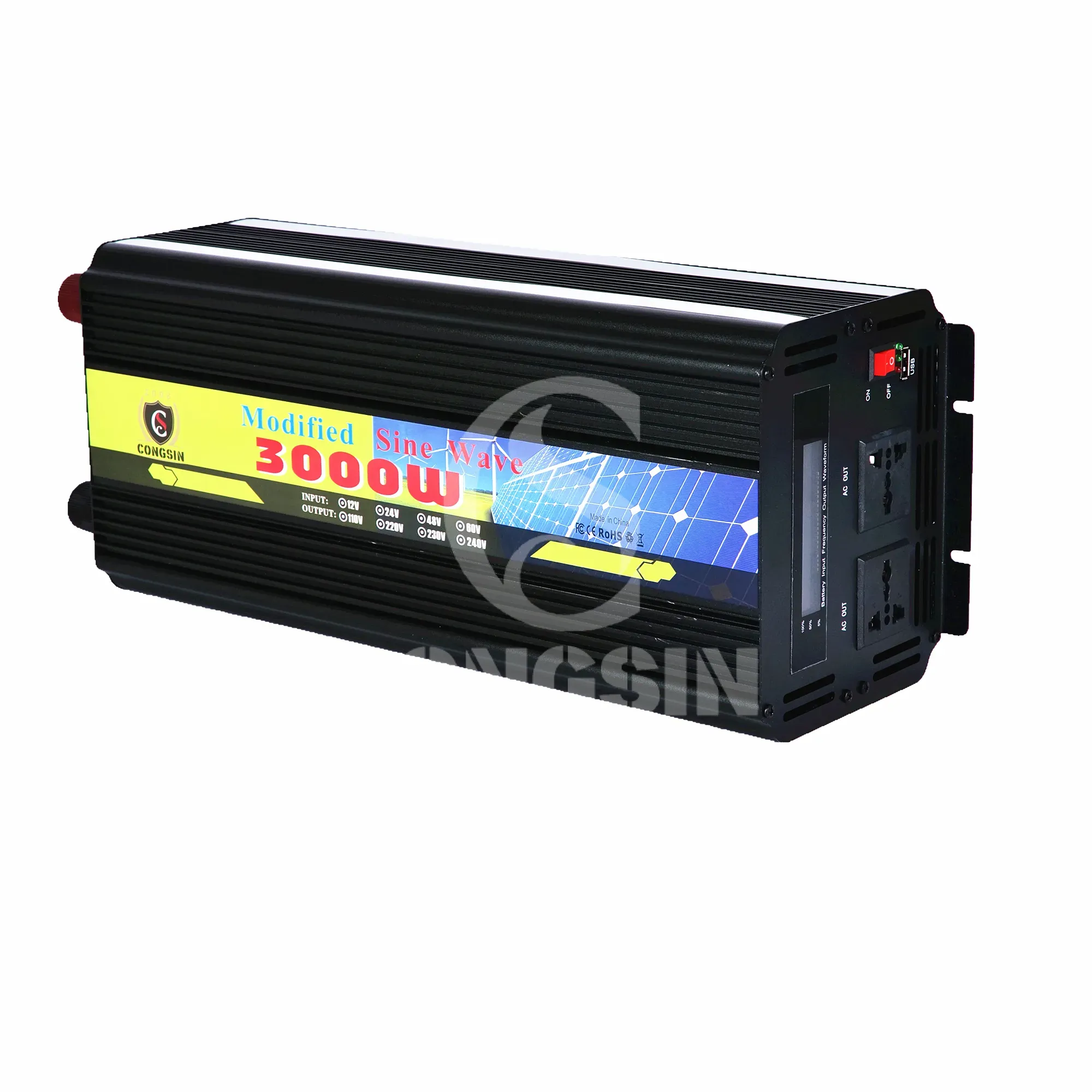
This is a modified sine wave inverter, suitable for most conventional home appliances and electronic devices; pure sine wave is suitable for precision devices with extremely high power requirements. This modified sine wave is more cost-effective at 2000W, meeting the needs of most scenarios.
Pure Sine Wave Inverters
Can the 3 AC sockets drive high-power devices at the same time?
Yes, but it is necessary to ensure that the total power of the 3 devices does not exceed 2000W (continuous power). For example, it can drive 1 1000W electric oven + 1 500W microwave + 1 400W printer at the same time (total power 1900W), avoiding total power overload to trigger the protection mechanism.
Get in Touch with Our Team
You can also communicate with us directly through our online contact form. Please fill in the following information, and our team will contact you as soon as possible after receiving your message.

CONGSIN is a trusted OEM factory for power inverters, solar charge controllers, and DC converters. Reliable solutions for global B2B buyers.
 High Quality
 7/24 Service
 Guaranteed Warranty
© 2025 Congsin. All Rights Reserved.